
Where Will the Buck Stop?

It’s not heavy, because it matters
Author: Colin St John, Group Chairman
Why Employers Are Being Asked to Carry Responsibilities That Were Never Meant for Them
This morning I read a proposal for a new webinar designed to help employers support staff affected by another societal problem. A serious issue, and one that deserves attention. But as I sat with it, something else surfaced, not about the problem specifically, but about the growing pattern behind it.
Because this wasn’t the first proposal of its kind. It was the latest in a long line.
Debt support. Mental health support. Burnout support. Fraud awareness. Cost‑of‑living stress. And now gambling harm.
Each one important. Each one human. Each one landing quietly on the employer’s desk.
And as someone who has run a 150‑person operation, chaired a financial‑education provider, and spent a lifetime saying “yes” when people need help, I felt a familiar tension rise.
Not resistance, not reluctance, but realism.
How many societal crises can employers be expected to absorb before we acknowledge the limits?
Because the workplace has become the default destination for every problem society struggles to contain. Not through consultation. Not through shared planning. But through a steady, unspoken drift of responsibility.
And leaders feel it, they carry it, and they rarely say it out loud.
But it needs to be said.
Operational Reality Leaders Cannot Ignore
When you’ve run a business, really run one, you learn quickly that caring about your people and being able to support them are not the same thing. I spent 35 years across two very different companies in the PVC building‑products sector, and both taught me the same lesson.
Capacity isn’t a moral issue, it’s an economic one.
One company, founded in 1940’s, had the stability, margins, and market position to invest heavily in its people. The other, founded in 1990, spent its first twenty years fighting for market share, reinvesting every spare penny into improving the customer offering.
Both cared about their staff. Both valued their workforce. But they operated under completely different financial realities and the depth of wellbeing support reflected that.
Today, those realities are tightening for everyone.
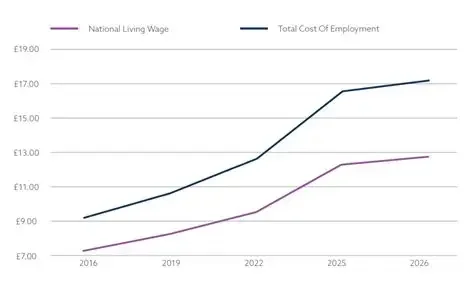
Since 2020, the cost of employing someone in the UK has risen sharply. Employer National Insurance has increased from 13.8% to 15%, and the threshold at which NICs become payable has dropped from £9,100 to £5,000, pulling more of every salary into the calculation.
Rising pressure on employers
The CBI estimates this NIC rise alone adds over £17bn to private‑sector labour costs, pushing total employer NIC spending above £100bn a year.
At the same time, the National Living Wage has climbed to £12.71 an hour for workers aged 21 and over.
Statutory Sick Pay is now payable from day one.
Day‑one parental rights, extended unfair‑dismissal protections, and new enforcement powers under the Fair Work Agency have all increased compliance costs and hiring risk.
In customer service, we used to say: if it’s important to George, our customer in Reading, it’s important to us. It taught us to see problems through the customer’s eyes. making their problem our problem.
In today’s employment landscape, are we reaching a point where every societal issue is becoming the employer’s responsibility, regardless of whether the organisation has the financial capacity to absorb it.
And that shift is happening at the exact moment when employment costs are rising faster than at any point in the last decade.
This is the operational reality leaders are navigating.
This is the context policymakers rarely acknowledge.
And this is why the question “Where will the buck stop?” is not resistance, it’s realism.
The Systemic Drift of Responsibility
When you sit in a Chairman’s seat within the financial‑education and employee‑support world, you see a different kind of pressure building, Not inside individual companies, but across the entire system.
You see the gaps that public services aren’t filling. You see the cracks that people fall through. And you see the quiet, steady drift of responsibility from national institutions to employers.
Not because employers asked for it.
Not because they’re best placed to handle it.
But because they’re the only part of the system that still functions with any consistency.
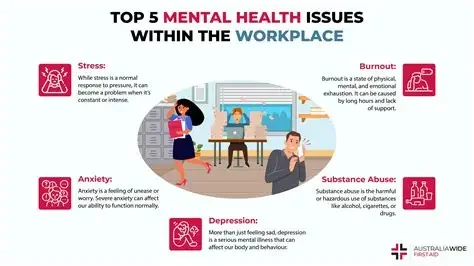
Mental‑health services are overwhelmed. Talking‑therapy waits regularly stretch into months, and specialist mental‑health support often takes far longer.
Workplace wellbeing under pressure
NHS treatment waiting lists now exceed 7.5 million people, with many waiting months for routine operations or specialist consultations.
GP access is under pressure, and social care has been under‑resourced for years leaving families to absorb responsibilities that inevitably spill into the workplace.
Welfare systems struggle with delays, errors, and rising fraud, pushing employees toward salary advances and employer‑funded hardship support.
Policing capacity for fraud and digital crime is stretched thin, leaving employers to educate staff on scams and digital safety. Addiction services are patchy, and support is limited. Which is exactly how issues end up on an employer’s agenda in the first place.
And sometimes I think back to when I first started work in 1974.
We didn’t have an HR department, we had a Personnel Manager.
One person in an office with a name‑plate on the door…,
Thurston Wright, Personnel Manager
And besides basic admin, the only staff issues that ever landed on his desk were “lazyitis”, “can’t‑be‑arsed‑itis”, and the CDMs, the “Can’t Do Mondays”.
Most of it was dealt with through a frank exchange, a raised eyebrow, and the whites of someone’s eyes. It wasn’t sophisticated, but it reflected the reality of the times we were in. Employers were responsible for attendance, performance, conduct, discipline and payroll.
That was the job.
Compare that to today, where employers are expected to manage mental‑health crises, debt stress, addiction, fraud vulnerability, burnout, safeguarding etc. etc. The role hasn’t just expanded, it’s been completely reshaped.
And none of it came from employers asking for more responsibility. It arrived gradually, quietly, through policy changes, societal shifts, and public‑service strain.
We’ve seen this pattern before. When the smoking ban arrived, most of us supported it, it was the right policy, and as employers we had a clear duty of care to create a smoke‑free environment for everyone.
Protecting non‑smokers mattered.
Supporting smokers mattered.
And I took that responsibility seriously.
But what none of us saw coming was how quickly that duty of care would collide with the fairness and togetherness we’d spent years building.
Every concession to help smokers stay safe and compliant such as designated areas, structured breaks, sheltered spaces, quotas, rotations. Created a new ripple of unfairness for the rest of the team.
Suddenly we were navigating “them and us” dynamics that had never existed before. Smokers weren’t just taking a break; they were forming social groups. Non‑smokers weren’t just staying at their stations; they were watching colleagues leave repeatedly and feeling left behind.
I remember shifts where 60–65% of the production team were ‘legally’ off the shopfloor, sat together in a company‑funded smoking shed, while picking rates in the warehouse dropped because some non‑smokers simply stopped working whenever a smoker went out. Not out of malice, out of frustration.
Out of a sense that the balance had tipped.
And all of it had to be managed. Monitored. Recorded. Explained. Justified.
We had to create new language, smoking breaks, smoking quotas, smoking areas, rest‑break conversions, lunch‑break sacrifices and then legislate for it in the company handbook. It swallowed management time, created new tensions, and slowly eroded the “in‑it‑togetherness” we’d worked so hard to build.
None of this was asked for by employers. None of it was anticipated. It was a public‑health policy that quietly became a workplace responsibility, not because we resisted it, but because human behaviour filled the gaps.
And that’s the pattern we’re seeing again today, just with far heavier issues.
Financial stress, debt, fraud, addiction, burnout aren’t “workplace issues”. They’re societal issues that happen to show up at work because work is the one place people still go every day. And when those issues surface, employers are increasingly expected to respond, even when the root causes sit far outside the workplace.
This is the part policymakers often miss.
They see employers as stable, structured, reachable, and accountable. They see HR teams as the front line of human support. They see wellbeing programmes as a convenient delivery mechanism. And they assume capacity.
But capacity isn’t infinite. And it certainly isn’t equal across organisations.
Some employers can absorb more.
Some can absorb less.
Most are already absorbing too much.
In the financial‑education space, we see this every day. EAP providers are being asked to solve problems that used to sit with healthcare, social services, community organisations, or government programmes.
Financial education is being used as crisis management rather than prevention. And employers are being positioned as the de facto safety net for issues that extend far beyond the workplace.
This isn’t a criticism of support. It’s a criticism of unbounded responsibility.
Because when every societal problem becomes an employer problem, the system isn’t being strengthened — it’s being offloaded. And the organisations carrying the load are the same ones already navigating rising employment costs, tightening margins, and increasing regulatory pressure.
The question isn’t whether employers care. The question is whether the system understands what it’s asking them to carry.
And right now, it doesn’t.
Caring Doesn’t Come With Infinite Capacity
There’s a part of leadership that never shows up in job descriptions, board packs, or organisational charts. It’s the human part — the part that notices when someone is struggling, the part that listens longer than it should, the part that quietly asks, “Are you alright?” even when the answer might pull you into something heavy.
Burden grows, capacity doesn’t
Most leaders don’t talk about this. But they feel it every day.
And this is where the tension really sits.
Because leaders care. They care deeply. They care instinctively. They care long before any policy tells them to.
I’ve never met a leader who didn’t want to help their people. I’ve met plenty who were exhausted by the weight of what they’re being asked to carry.
That’s the difference policymakers often miss.
They see employers as structured entities. Leaders see people — real people — with real lives, real pressures, real vulnerabilities. And when someone in Accounts, or on the shop floor, or out on the road is dealing with debt, addiction, burnout, fraud, or financial instability, leaders feel it. They don’t switch off. They don’t detach. They don’t say, “Not my problem.”
But caring doesn’t create infinite capacity.
It doesn’t create infinite budget. It doesn’t create infinite resilience. It doesn’t create infinite bandwidth.
And it certainly doesn’t create infinite responsibility.
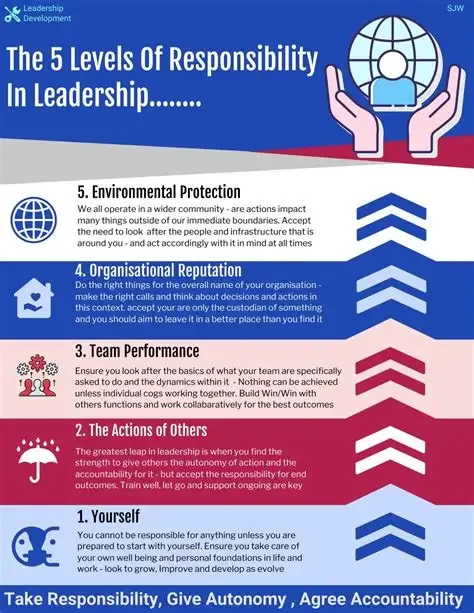
Leaders are human beings carrying human weight — often quietly, often alone, often without the recognition that the emotional labour of leadership is becoming heavier every year.
This is why the question “Where will the buck stop?” isn’t a rejection of support. It’s a recognition of reality.
Because when every societal issue becomes an employer issue, leaders aren’t just being asked to manage operations, compliance, and performance. They’re being asked to absorb the emotional fallout of problems that sit far outside the workplace — problems that used to be held by families, communities, public services, or national systems.
And they’re being asked to do it at a time when employment costs are rising, margins are tightening, and organisational resilience is being tested from every direction.
Leaders care. But caring is not the same as being able to carry everything.
And that’s the human truth policymakers need to hear.
Where the Buck Should Stop
If employers can’t carry everything, and policymakers keep adding more, then the question becomes unavoidable:
Where should the buck actually stop?
The answer is straightforward: Responsibility should stop where the root cause sits — not where the symptoms happen to appear.
Employers have a role. A meaningful one. But not an unlimited one.
They can support. They can educate. They can listen. They can signpost. They can create safer, more informed workplaces.
But they cannot replace the institutions built to hold societal problems at scale.
They cannot become the nation’s mental‑health infrastructure. They cannot become the debt‑advice system. They cannot become the addiction‑support network. They cannot become the fraud‑prevention authority. They cannot become the financial‑resilience safety net.
And they should not be expected to.
Because when every societal issue becomes an employer issue, two things happen:
Root causes go unaddressed. The system simply shifts the burden instead of fixing the problem.
Leaders burn out under responsibilities they were never resourced to carry. And the people who need help end up with inconsistent, fragmented support.
The buck should stop with a shared model — one where employers play their part, but not every part. One where policymakers recognise organisational limits. One where national systems strengthen rather than shrink. One where support is coordinated, not offloaded. One where leaders are partners, not substitutes.
Because if we continue down the current path — where every societal crisis quietly becomes an employer responsibility — we won’t just exhaust leaders. We’ll weaken the very organisations people rely on for stability, income, purpose, and community.
And that helps no one.
Leaders care. Employers care. But caring is not the same as being able to carry everything.
It’s time policymakers recognised that. It’s time responsibility was shared, not shifted. And it’s time we asked the question plainly:
Where will the buck stop — and how long can we pretend it should always be the employer?